| |
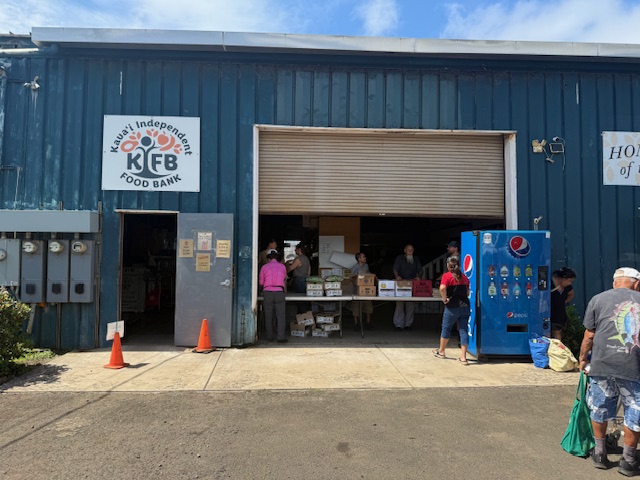
Kauai Food Bank, Inc., a non-profit,
tax-exempt charitable organization, was formally established
in the State of Hawaii in November, 1994. Prior to independent
incorporation and since its inception in 1992, the organization
had been operating under Hawaii Food Bank, an Oahu-based
non-profit.
The circumstances of the organization's birth was nothing
less then catastrophic. On September 11, 1992, Hurricane
Iniki struck Kauai, the northernmost island in the 50th
State, and left thousands of individuals homeless and
subsequently unemployed. In the aftermath, community
heroes and heroines first formed the grassroots Kauai
Food Bank amidst incredible environmental, economic
and emotional chaos. The storm was classified Category
5, and prior to September 11, 2001, was considered the
fifth worst national disaster in the history of the
United States.
Initially operated purely by volunteers, Kauai Food
Bank distributed over five million pounds of emergency
food directly to the hurricane victims. By 1994, Kauai
Food Bank served about 10,000 individuals per month,
or about 20 percent of the island's population. That
year, Kauai Food Bank incorporated, obtained
recognition as a 501 (c)(3), and subsequently developed
into a professionally staffed, award-winning organization.
It has earned the reputation of being the most innovative
food bank in Hawaii by addressing the root cause of
hunger through original and unique programming. This
programming now serves as a model for food banks across
the country.
Today the Kauai Food Bank
employ six full time staff with a supportive cadre of
specially trained and screened volunteers and over
thousands of general community volunteers. In 1999, the
Kauai Food Bank served the largest
percentage of any county population in Hawaii.
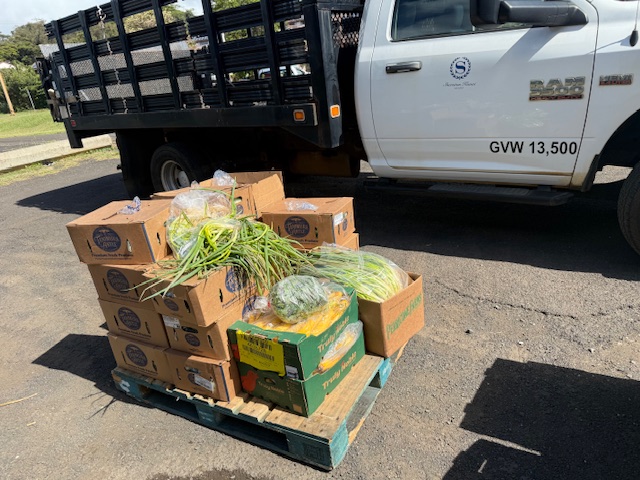
Kauai Food Bank now solicits and distributes over
411,000 pounds of food annually to feed over 548,000
meals to needy persons.
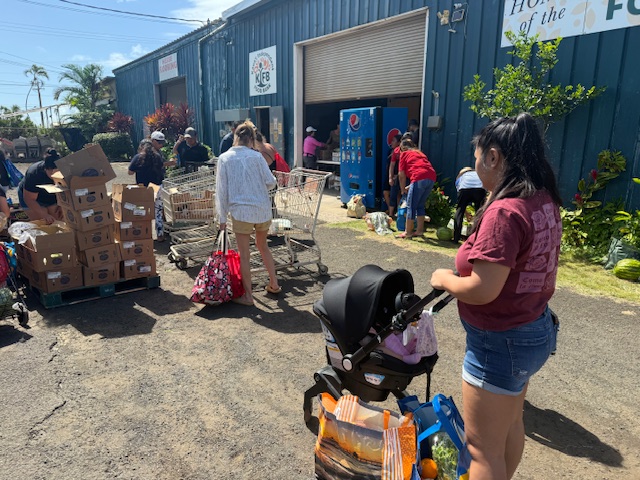
We receive about 5,000 requests for emergency
food services each month to serve about 8% of
Kauai’s total population.
About half of those served are children
and 15% are elderly.
|